Sharper decisions
Directors get enough context to separate business risk from technical noise, which makes technology votes less reactive and more tied to strategy.
FinEdge Strategies is led by a former community bank CTO, Bankers' Bank technology executive, cloud migration architect, cybersecurity practitioner, author, and strategist who has spent his career translating complex technology into decisions executives and directors can actually govern.

Dr. Jeff Armstrong built FinEdge Strategies for the exact institutions he has served for decades: community banks, credit unions, and the leaders responsible for making high-stakes technology decisions without enough plain-English context.
His background is not theoretical. He has led technology inside a $350 million community bank, managed infrastructure for Bankers' Bank while billions of dollars moved through the environment each day, helped recover more than $1 million in AWS overspend, guided Fortune 500 cloud migrations, and worked across major partner ecosystems at AWS, Deloitte, Cognizant, Splunk, and Cisco.
He also worked with leadership and served as lead architect to secure Equifax's financial server environment after its breach. That kind of work changes how you talk about cybersecurity in a boardroom. It stops being a generic risk category and becomes a conversation about resilience, accountability, customer trust, and the decisions leaders have to make when the stakes are real.
That mix matters. A board discussion about AI, cybersecurity, vendor dependence, cloud cost, or core modernization should not sound like a product demo or an audit checklist. It should connect technology choices to resilience, regulatory scrutiny, customer trust, strategic flexibility, and the institution's ability to compete.
That is the selling point behind FinEdge: better board education should produce better board behavior. Directors should leave a session able to challenge a weak vendor answer, see the risk behind a shiny platform, understand what management is asking them to approve, and make decisions that improve outcomes instead of merely documenting that training happened.
For community financial institutions, board education has to do more than satisfy a calendar requirement. It should change the quality of questions in the boardroom.
Directors get enough context to separate business risk from technical noise, which makes technology votes less reactive and more tied to strategy.
Boards learn how to challenge vendor claims, API access, data exposure, platform dependence, exit plans, and contract concentration without pretending to be engineers.
Education is connected to governance evidence: completion records, repeatable topics, clearer minutes, and board members who can explain how they oversee technology risk.
AI, cybersecurity, cloud, fintech, and core decisions stop arriving as isolated agenda items. Directors start seeing patterns before they become expensive problems.
Jeff's work spans the environments community financial institutions actually depend on: core banking, payments, cybersecurity, cloud platforms, customer contact centers, enterprise risk, vendor ecosystems, and executive decision-making.
Led technology for a six-location, $350 million community bank. That experience anchors FinEdge in the realities of board reporting, regulatory pressure, local-market constraints, budget discipline, and the need to make technology useful without overwhelming directors.
Managed technology in a correspondent banking environment processing roughly $8 billion to $11 billion in daily transactions. The lesson was simple: technology governance is not abstract when operational trust is the product.
Worked across large-scale AWS migration, contact center modernization, resilience, and infrastructure programs, including Fortune 500 environments and one of the largest Amazon Connect deployments globally. Jeff also worked with leadership and served as lead architect to secure Equifax's financial server environment after its breach. That gives FinEdge a practical lens on what cloud and security programs can do, where they fail, and what boards should ask before approving another platform decision.
Jeff's cybersecurity background includes formal graduate study, CISSP certification, and hands-on work in high-pressure security contexts. For boards, that turns cyber from a monthly dashboard into a governance discipline: tolerance, accountability, resilience, and response.
Jeff completed a DBA in Strategy and Innovation with doctoral research focused on responsible AI adoption strategies in U.S. technology organizations. That research now informs FinEdge's board education on AI oversight, vendor claims, model risk, policy, and decision rights.
The goal is not to turn directors into engineers. The goal is to help directors ask better questions, recognize weak answers, and govern technology as part of institutional strategy.
Board-ready education on where AI already appears in financial institutions, how to evaluate vendor claims, and how to set policy without freezing useful innovation.
Plain-English guidance for cyber risk appetite, incident preparedness, third-party exposure, resilience, and the difference between activity reporting and true board oversight.
Support for boards evaluating core vendors, fintech dependencies, API access, contract concentration, exit plans, and the operational risk hidden inside convenience.
Practical review of cloud strategy, cost governance, migration readiness, and the board-level questions that keep modernization from becoming expensive drift.
Decision support for technology investments that affect members, customers, staff, compliance, service quality, and competitive position.
Independent perspective for CEOs and boards evaluating technology leadership, reporting structure, strategic alignment, and whether the institution is staffed for the work ahead.
FinEdge combines banking experience with formal strategy, cybersecurity, and leadership education. The result is board education that respects both the business and the technology.
Jeff's books are another proof point for FinEdge: he can explain technical systems in a way leaders can use. That is the same muscle board education needs.
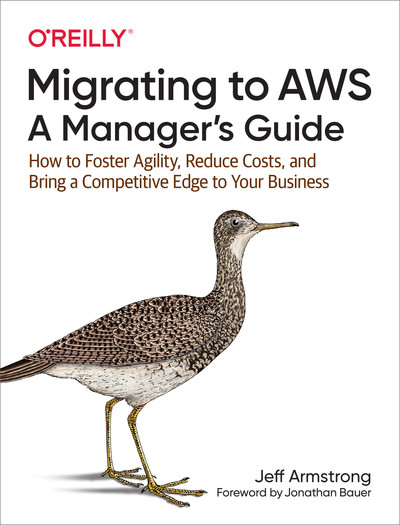
O'Reilly Media
This book was written for executives, senior leaders, engineering teams, and IT managers who need to evaluate AWS migration with clear eyes. It covers the business case, workload discovery, operational readiness, governance controls, migration planning, and the traps that turn cloud migration into expensive drift.
For FinEdge clients, it shows the same approach Jeff brings to board education: make the technology understandable enough for leaders to govern the decision, not just approve the project.
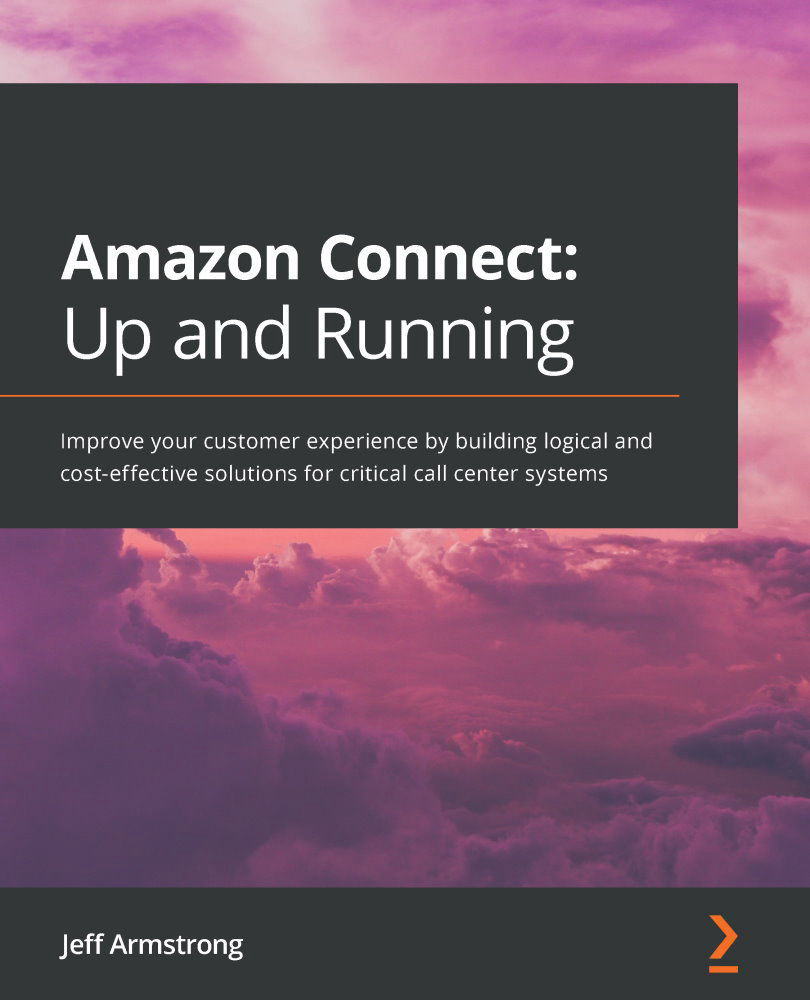
Packt Publishing
This hands-on guide explains how to plan and build Amazon Connect contact center systems, including contact flows, cost estimation, chat, AI bots, analytics, and integrations with critical business systems.
The board-level relevance is customer experience and operating discipline. Contact centers are not just technical platforms. They affect service quality, staffing, vendor dependence, resilience, and the institution's ability to respond when customers need help.
If your directors are expected to govern AI, cybersecurity, vendors, cloud, and digital transformation, they deserve education that improves decisions, strengthens oversight, and helps management deliver better results.